The card on the table
Picture a meeting. On one side of the table sits a founder who has spent fifteen years building something real. His company has delivered hundreds of projects. His people are good. His numbers are sound. He has finally been invited to pitch for the kind of contract he has been working towards for a decade.
He slides his business card across the table. The buyer picks it up, glances at it, and turns it over. Later, the buyer's team opens the company website to "take a quick look". The logo was drawn in a week when the company had four people. The site still talks about services the company stopped offering years ago. The photographs are stock.
Nobody in the room says anything. Nobody needs to. A small doubt has entered, and it will sit quietly under every number in the proposal.
The founder did nothing wrong. His company is better than it looks. That is exactly the problem.
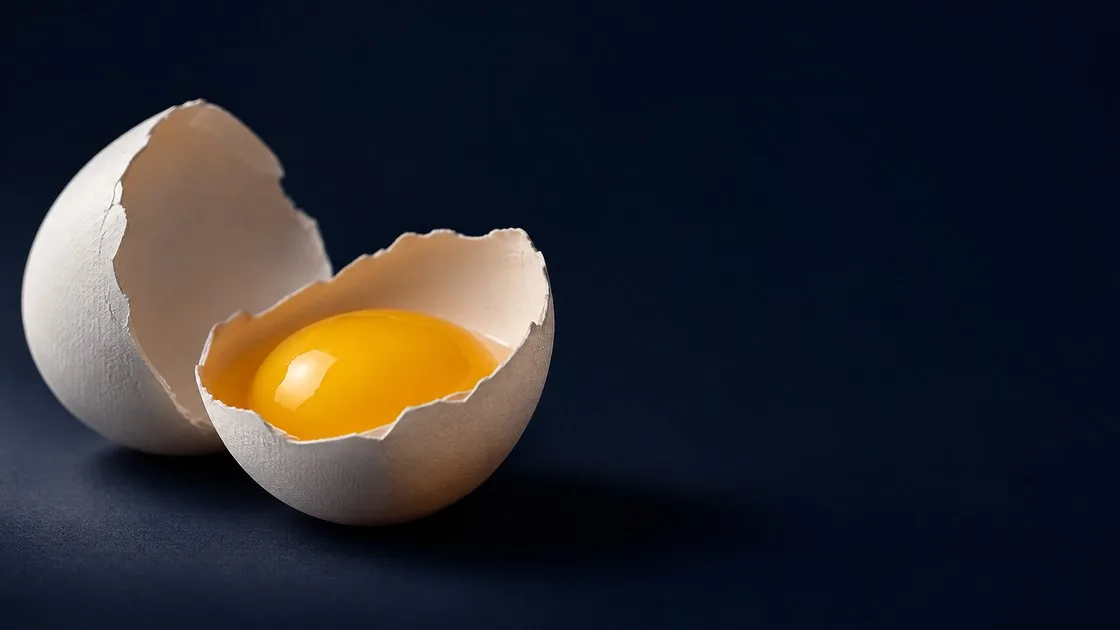
At Yelloyolk we have a way of describing it. Every company is an egg. There is the yolk, the substance, the reason the company exists and the source of everything it produces. And there is the shell: the logo, the website, the company profile, the business card, everything a stranger touches first. The world meets the shell. Only the people already inside know the yolk.
Why the world judges the shell
It is tempting to call this unfair. Buyers should read the proposal, check the references, visit the site. Some do. But before any of that, they have already formed a view, and the research says they form it almost instantly.
In 2006, a team led by Gitte Lindgaard at Carleton University showed volunteers web pages for very brief glimpses. People formed a judgement of a page's visual appeal in about 50 milliseconds, roughly the length of one television frame. More striking, those split-second ratings matched the ones people gave after looking for longer (opens in a new tab). The first glance was not a draft opinion. It was the opinion.
A few years earlier, a Stanford-led study asked 2,684 people how they decided whether a website was credible. The factor they mentioned most often was not the company's history or its credentials. It was the site's design and look, cited in 46.1 percent of their comments (opens in a new tab).
This is not shallowness. It is efficiency. A buyer comparing six suppliers cannot audit six companies from the inside. So the mind does what it has always done with eggs, fruit and strangers: it reads the surface as a signal of what lies beneath. A careless shell suggests a careless inside. An outdated shell suggests a company that has stopped moving.
Usually that guess is reasonable. For the companies we work with, it is wrong, and it is costing them.
What the yolk is made of
The yolk is not a slogan or a set of values on a wall. It is the accumulated substance of a company: the things that took years to build and cannot be faked.
- What it has done. The projects delivered, the products shipped, the containers loaded, the tenders won.
- How it does it. The methods, standards and habits that make its work reliable.
- Who does it. The people, and what they know that competitors do not.
- Who trusts it. The clients who came back, the markets it now serves, the relationships that took a decade.
- What it believes. The one or two convictions that explain every hard decision the founder ever made.
In an established company, the yolk is usually rich. That is what makes this problem so frustrating for the people inside. They know what they have. They see it every day. They assume, quite reasonably, that the quality of the work speaks for itself.
It does, to anyone who gets close enough to hear it. The shell decides who gets close.
How a good company ends up with the wrong shell
No founder sets out to undersell their company. The gap forms quietly, through success.
In the early years, the shell and the yolk match. A small company has a small logo, a simple website and a modest profile, and that is honest. Then the company grows. It takes on bigger projects, opens a new market, hires better people, maybe wins its first international client. The yolk thickens every year.
The shell does not grow on its own. It was made once, for the company as it was then, and it stays exactly that size. Nobody budgets for it, because nothing is visibly broken. The website still loads. The logo is still recognisable. The team is busy doing the work that actually pays.
So the distance widens, one good year at a time, until the company is presenting itself as the business it was ten years ago. We call that distance the credibility gap. It is rarely noticed from inside, because insiders never look at the shell the way a stranger does. It shows up from outside, at the worst possible moment: when the stakes are highest and the buyer knows the company least.
The most expensive version of the gap is the one nobody mentions. Buyers do not write back to say "your website made us doubt you". They simply shortlist someone else, and the founder never learns why.
A true shell, not a prettier one
The obvious response is to make the shell more attractive. Hire someone, pick a trendier font, add some gradients, call it a rebrand. This usually makes things worse, because it creates a second kind of gap: a shell that promises more than the yolk can deliver. Buyers are good at detecting that too. A shiny surface on an unclear company reads as decoration, and decoration reads as distraction.
An eggshell is not decoration. It does three jobs, and they are a fair description of what a company's brand should do:
- It protects. It keeps what is valuable inside from being misjudged or diluted.
- It holds the shape. It gives the substance a clear, consistent form, so the same company appears everywhere it is met.
- It tells the truth about what is inside. Nobody mistakes an egg for a stone. The shell signals, honestly, the kind of thing it contains.
So the goal is not a beautiful shell. It is a true one: a shell grown to the size of the yolk. That means positioning that says what the company has become, words its buyers recognise, an identity with the weight of a serious business, and a website that shows the proof instead of describing it.
This is also why we are careful with claims. A true shell has no room for numbers you cannot back or awards you did not win. The moment a buyer catches one exaggeration, they discount everything else. Honesty is not a constraint on good branding. It is the material.
How we find the yolk
You cannot design a true shell from the outside. So our work starts by going in, and only then coming back out.
- We look at the shell as a stranger would. Before we talk to anyone, we read the company exactly as a new buyer would: the website, the LinkedIn page, the profile, the first page of search results. We write down what a stranger would conclude in the first minute. That is the gap, stated plainly. We call it the Gap Snapshot.
- We go looking for the yolk. We talk to the founder, the team and, where we can, the clients. We ask what changed in the last five years, which projects they are proudest of, why clients stay, and what competitors cannot copy. The answers are almost never on the current website.
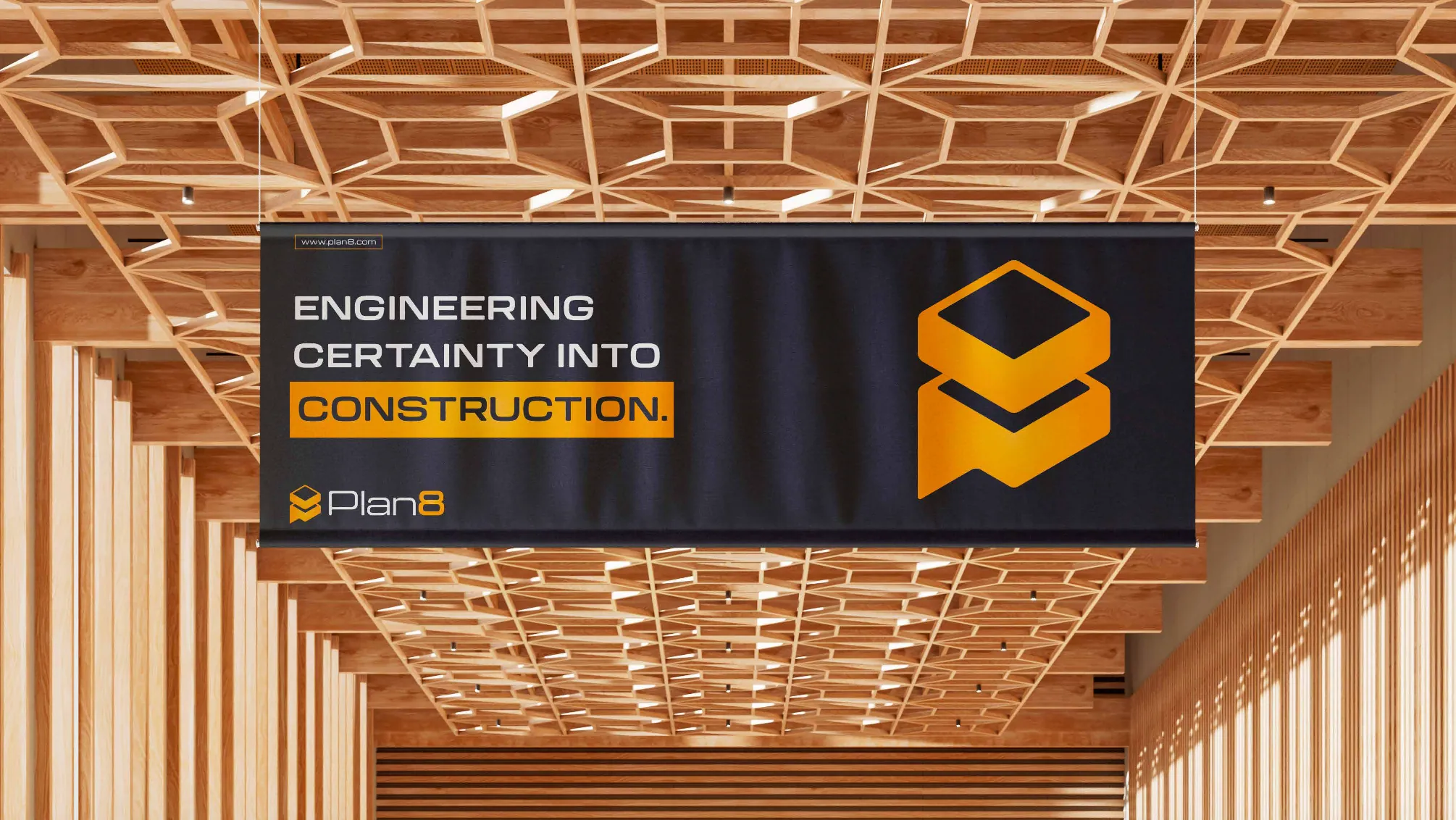
- We find the one true thing. Somewhere in all that material is a single idea that explains the company better than anything else. It becomes the centre of everything. For Plan8, a BIM and VDC company, it was the way a building model is assembled floor by floor, and the mark became the letter P, the number 8 and stacked structural layers.
- We build the shell as one system. Positioning, messaging, identity, website and sales materials are made together, around that one idea, so every place a buyer meets the company tells the same story. That is what our three scopes are built around.
- We show, rather than claim. Real projects, real clients and real numbers go up front. Adjectives go out. You can see the result in our work.
The result rarely feels like a new company to the people inside. More often they say it finally looks like them. That is the test we care about most.
The shell is a promise
There is an old instinct that substance should be enough, that good work will eventually be noticed and the world will look past the surface. Sometimes it does. But eventually is a long time to wait when a competitor half your quality looks twice as ready.
The better way to see the shell is as a promise. Every time a stranger meets your company, the shell makes a promise about what is inside. When that promise is smaller than the truth, you lose people who would have chosen you. When it is bigger than the truth, you lose them later and lose their trust as well. Only when the promise matches the truth does the shell do its real job: it lets the right people get close enough to find out how good you are.
That is all we mean by our name. Every company that has grown has a yolk worth seeing. Our work is to find it, and to build a shell that shows it.
Growth, made visible.